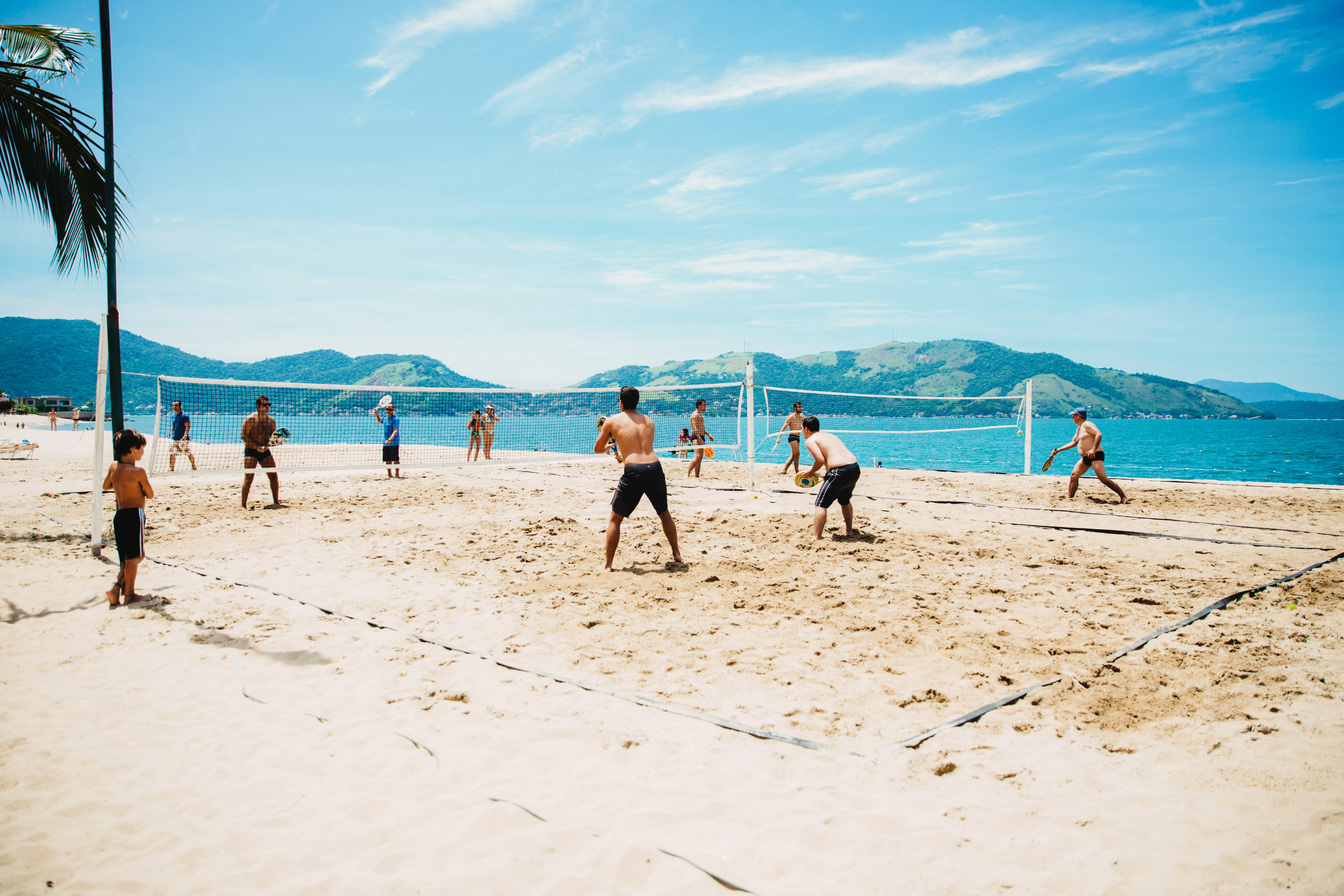
About sport
Beach tennis is a dynamic racket sport that combines elements of classic tennis and beach sports. It originated in Italy and gradually spread to other countries thanks to its simplicity and high appeal as a game. It is played on sand, which gives the game a specific dynamic and a summer atmosphere.
The basic principle is to hit the ball over the net so that it does not touch the ground. The game is fast, the rallies are short and intense, which makes beach tennis an ideal sport for active fun. Thanks to its simple rules, it is also suitable for players without previous experience with racket sports.
How to play beach tennis
Beach tennis is played in doubles and does not require complicated technique. The pace of the game is brisk and fun.
It is an ideal choice for those who want to try a new sport and enjoy moving on the sand.
Rules
A team consists of two players; it is played exclusively in doubles (2 against 2).
The court measures 8 × 16 meters, and the surface is sand (a standard beach volleyball court). The net height is 1.70 m.
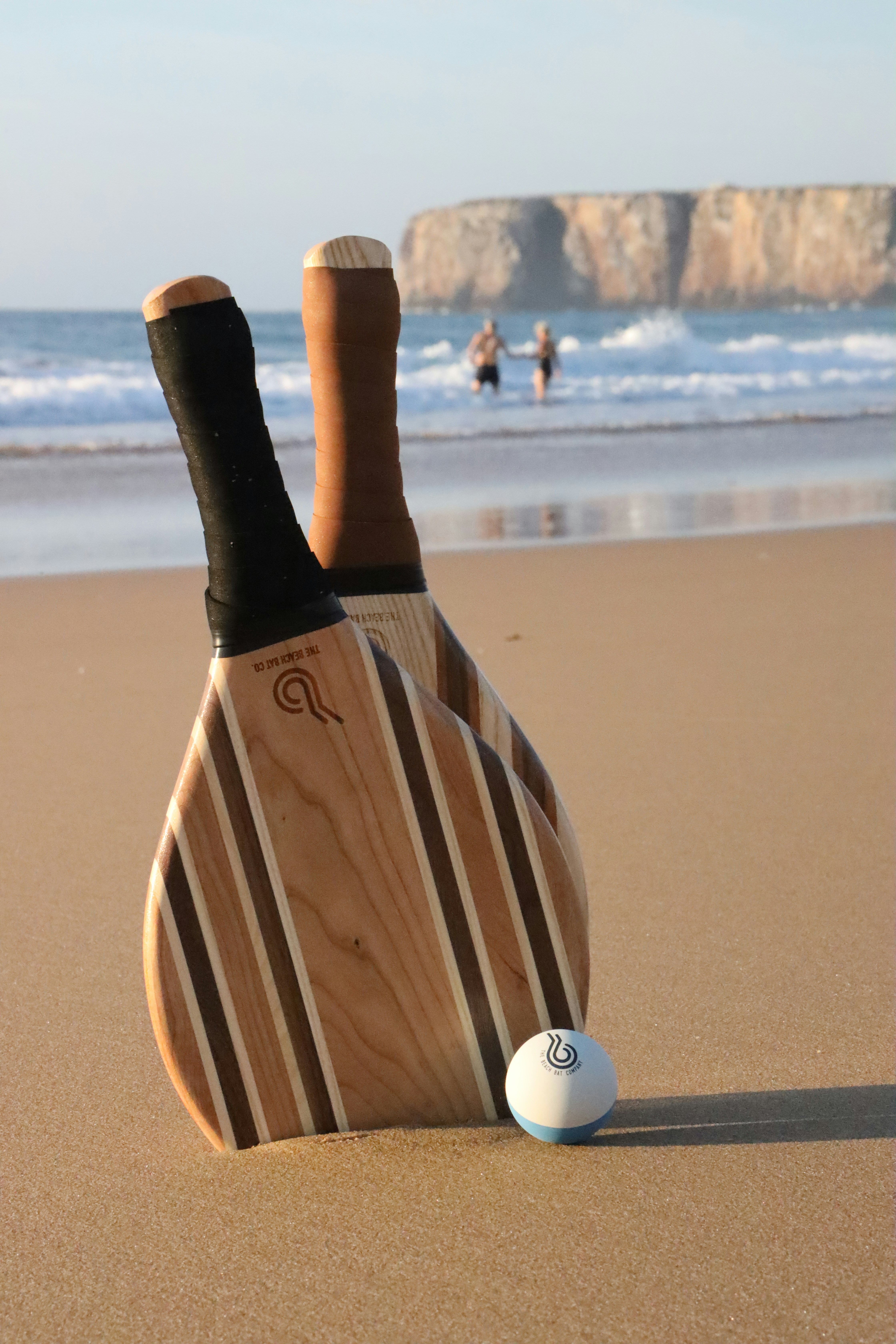
The game is played with an official beach tennis racket (without strings, max. length 50 cm) and a special underinflated ball.
The aim of the game is to play the ball over the net into the opponent’s court so that the opponent does not hit it or returns it incorrectly.
The match can be played over 3 sets, where the pair must win 2 to win the match, or over 5 sets, where the pair must win 3 to win. The variant depends on the players’ agreement.
Each set is played to 6 games, and the score must be won by a margin of two. At 6:6, a tie-break is played.
Scoring is like in classic tennis: 15–30–40, but without advantages – at 40:40, a deciding point is played.
Each player has only one attempt to serve.
Touching the tape on a serve is valid and play continues.
The serve can go anywhere into the opponent’s half.
The player must stand behind the baseline, but does not have to serve cross-court.
The ball remains in play after the serve until it touches the ground.
Any touch of the net with the body or racket is a fault.
The ball may be played with any part of the body except the hand; however, the player must have the racket in hand, otherwise the point is awarded to the opponent.