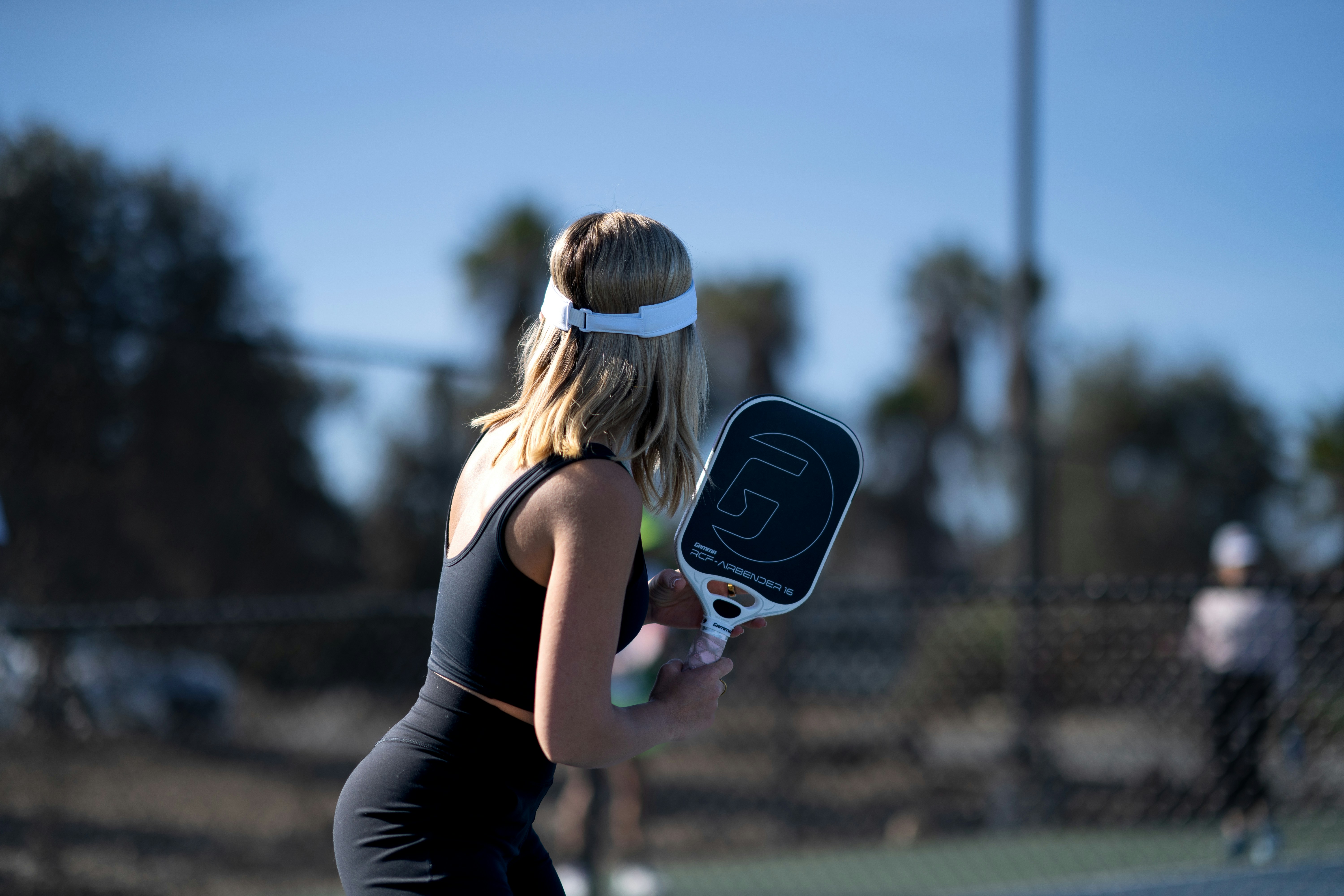
About sport
Pickleball is a modern sport that combines elements of tennis, badminton, and table tennis. It originated in the USA and quickly gained popularity thanks to its simple rules and accessibility for all age groups.
It is played on a smaller court with a lightweight paddle and a plastic ball. Pickleball is less physically demanding, but still dynamic and fun, which makes it an ideal sport for recreational players.
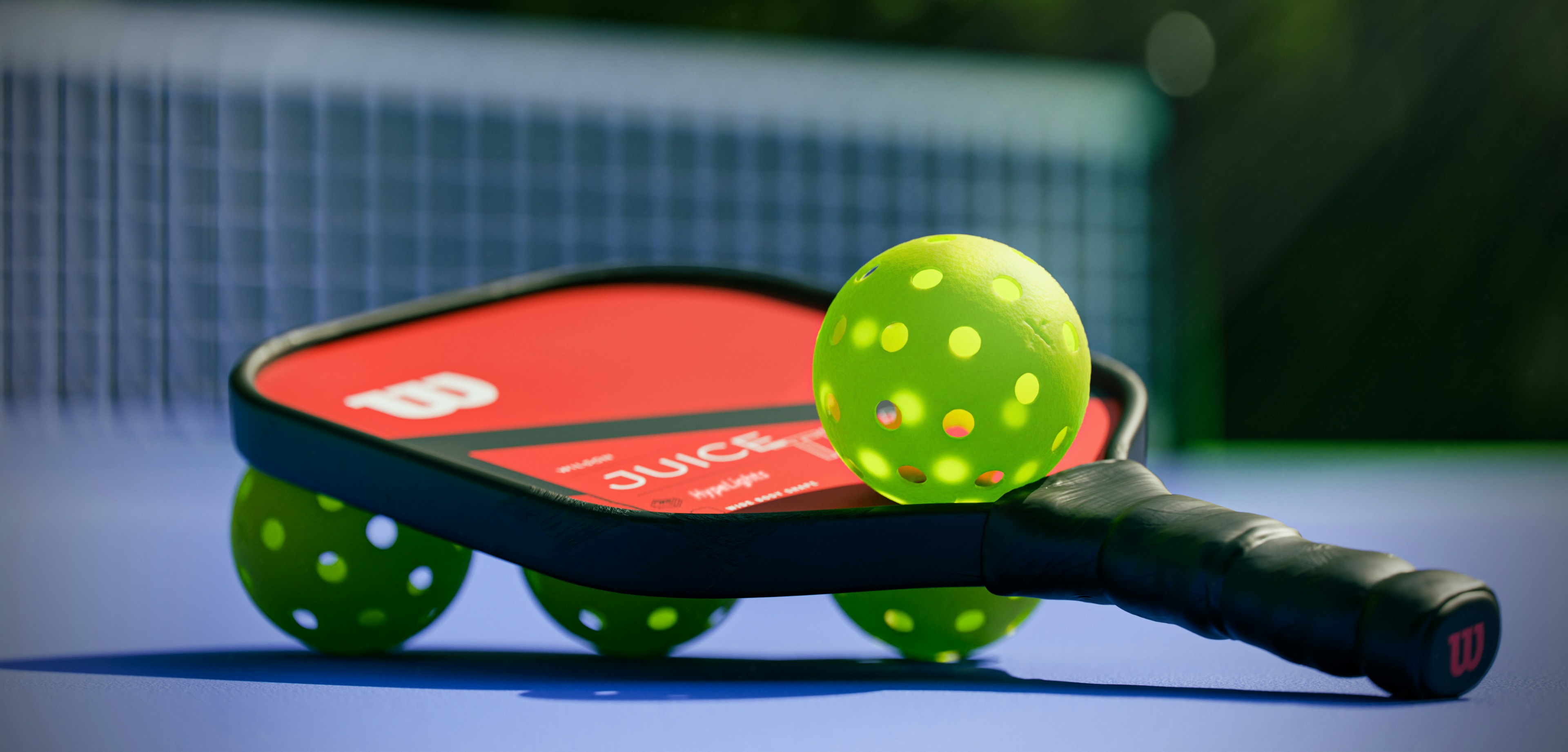
How to play pickleball
Pickleball can be played in singles or doubles. The rules are easy to learn quickly and the game has a pleasant pace.
An ideal sport for families and friends.
Rules
Pickleball is played as singles (one against one) or doubles (two against two).
The goal is to score points against the opponent by having the ball land on the opponent's side of the court without them being able to return it according to the rules.
The match is played to two winning sets. By default, it is played to 11 points with a two-point margin. At 10:10, play continues until one side gains a two-point lead. In tournaments, it may also be played to 15 or 21 points.
Only the serving side can score points; if the receiving side wins the rally, it gains the serve, with no point.
The serve is performed underhand, with the ball having to be struck below waist level (approximately at navel height).
On the serve, at least one foot must be behind the baseline and both feet must be outside the lines marking the court.
The serve is hit cross-court (diagonally) into the opponent's service court outside the non-volley zone.
The serve must first bounce on the ground in the appropriate service court, and touching the non-volley zone line counts as a fault.
Each server has only one attempt. If the ball hits the net on the serve and lands in the correct service court, the serve is replayed.
In doubles, both players on the team serve in turn until they lose the serve. After losing the serve, the ball is passed to the opponents.
At an even number of points, the player serves from the right side of the court; at an odd number, from the left.
After the serve, the ball must first bounce once on the receiving side and then once on the serving side before either player may volley it (hit without a bounce).
The non-volley zone (kitchen) is a 213 cm area from the net on both sides of the court, bounded by the net and a line parallel to the baseline.
A player may not volley if standing in this zone or touching its line.
This zone may be entered and the ball played only if it bounces off the ground.
After playing a volley, stepping into the non-volley zone due to momentum is not allowed.
The ball may be played directly or after bouncing off the ground; a double bounce on one side is a fault.
A ball that lands on a line (except the non-volley zone line on a serve) is considered good.
The ball may also be played after bouncing on the court surface and then bouncing out of the court area, if the player manages to return it to the opponent's side.
A fault by the receiver means a point for the server.
A fault by the server means loss of serve.
Faults include: the ball on a serve lands on a line or in the non-volley zone, the ball lands out of bounds (“out”), the ball is hit into the net, the ball touches the net on a serve and lands on a line or in the non-volley zone, a volley from the non-volley zone, a double bounce of the ball on one side, a double hit of the ball with the racket during a stroke, the ball hitting an object (e.g., the ceiling indoors), and touching the net with the racket, body, or clothing during a rally